Fire Door Inspections
Fire Door Inspection Services
Fire Door Inspection Services help ensure fire-resisting doors remain capable of restricting the spread of fire and smoke. Regular inspections identify defects, damage and maintenance issues that could compromise escape routes and compartmentation within a building.
What is a fire door?
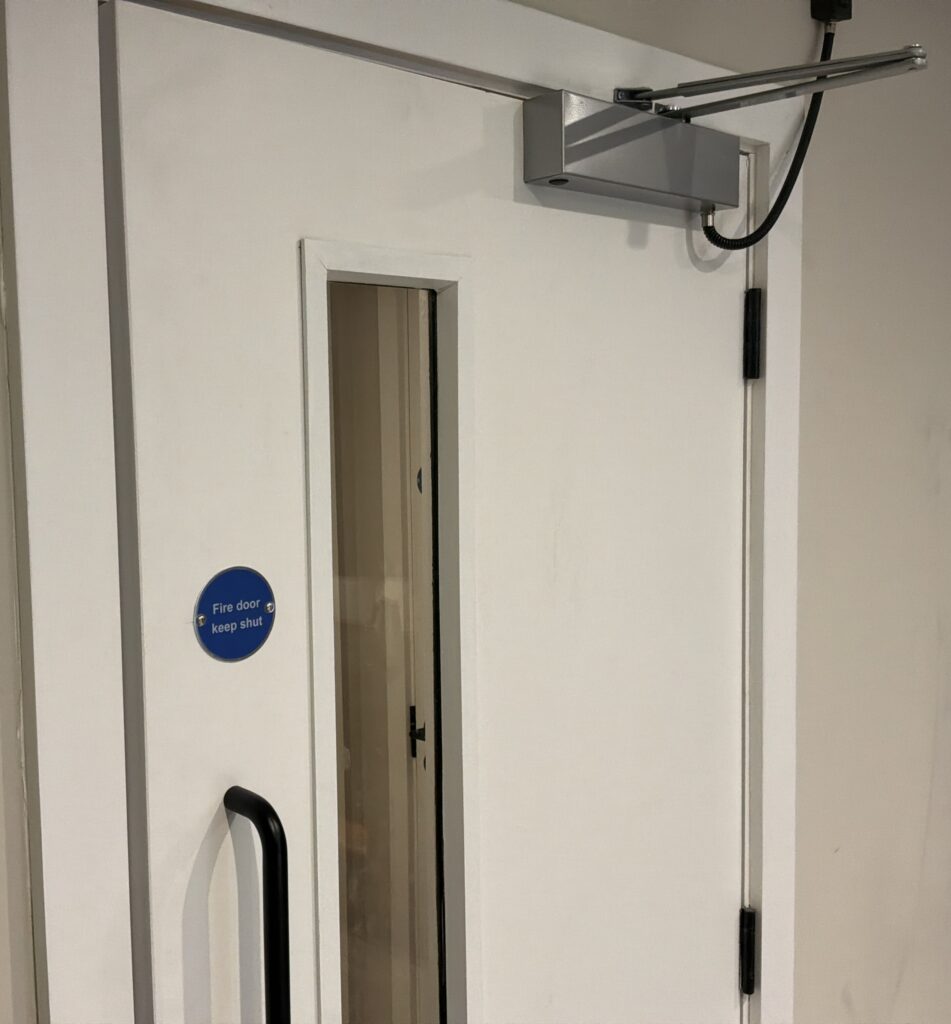
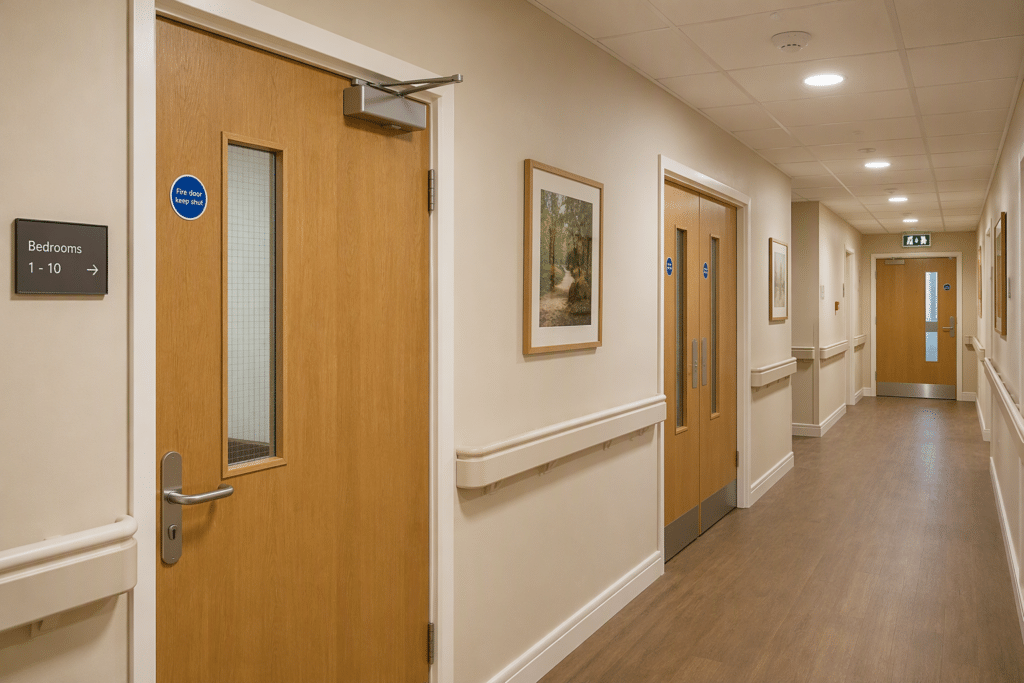
A fire door is a specially constructed door assembly designed to resist the spread of fire and smoke for a specified period of time. Fire doors form a critical part of a building’s passive fire protection strategy, helping to protect escape routes, maintain compartmentation and provide occupants with valuable time to evacuate safely.
Like all fire safety measures, fire doors are subject to daily use, accidental damage and general wear and tear. Over time, defects such as damaged seals, excessive gaps, faulty self-closing devices or altered hardware can affect performance.
Fire door inspections help identify these defects and confirm that fire-resisting doors remain capable of performing their intended function. Regular inspections support compliance with fire safety legislation and help ensure occupants remain protected in the event of a fire.
What is Checked During A Fire Door Inspection?
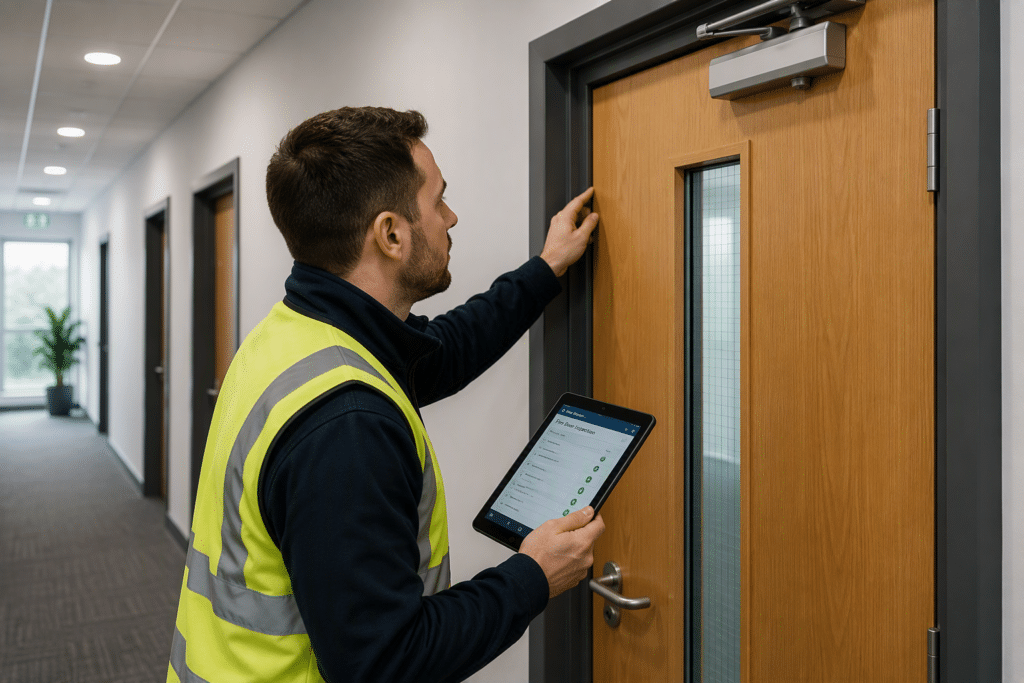
A fire door inspection service considers the condition and performance of the entire fire door set, not just the door leaf itself. JBR Fire Compliance reviews the key components that affect the door’s ability to resist the spread of fire and smoke, helping responsible persons identify defects, maintenance issues and remedial works required.
The inspection helps to identify visible defects that may affect fire and smoke resistance and provides practical recommendations to assist the responsible person in maintaining effective fire safety measures.
- Door Leaf Condition
- Performance marking labels
- Door Frame Condition
- Doors gaps and frame clearances
- Smoke Seals
- Intumescent Seals
- Hinges
- Door Closers
- Glazing and Vision panels
- Locks & Ironmongery
- Evidence of Damage or Alteration
Who Requires Fire Door inspection services?
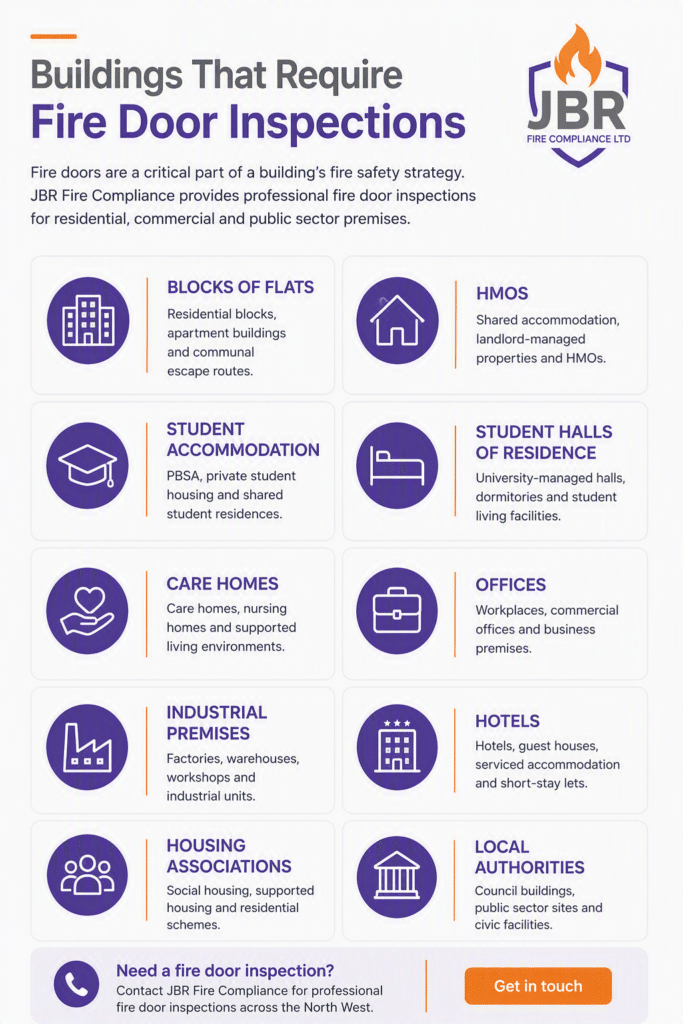
Fire door inspection services are important across a wide range of premises where fire-resisting doors form part of the building’s fire safety measures. In some buildings, such as certain multi-occupied residential premises, routine fire door inspections are a specific requirement under the Fire Safety (England) Regulations 2022. In other premises, including commercial and industrial buildings, the need for fire door inspections is typically identified through the fire risk assessment process to support compliance with the Regulatory Reform (Fire Safety) Order 2005.
In residential buildings, the fire door inspection arrangements required may vary depending on the type, height and complexity of the premises. Additional duties apply within certain higher-risk residential buildings, particularly where communal fire doors and flat entrance doors form part of the buildings fire safety management arrangements and within scope of Regulation 10 of the Fire Safety (England) Regulations 2022.
Blocks of flats
Fire door inspections are particularly important within blocks of flats where communal and flat entrance doors form part of the building’s compartmentation and means of escape strategy. Regular inspections help identify defects that may compromise fire and smoke resistance.
Fire door inspections can also support the findings of a fire risk assessment, helping responsible persons, freeholders and managing agents understand whether fire doors are being maintained effectively and whether remedial works may be required.
HMOs
HMOs often contain numerous fire doors protecting bedrooms, kitchens, corridors and stairways. Regular inspections help landlords and property managers maintain effective fire protection and demonstrate compliance with fire safety legislation.
Student Accommodation
Student accommodation experiences high levels of occupancy and frequent use of fire doors. Routine inspections help identify wear and tear before door performance is affected.
Care Homes
Care homes rely heavily on compartmentation and phased evacuation strategies. Fire door inspections help ensure residents, staff and visitors remain protected in the event of a fire.
Offices
Office buildings often rely on fire doors to protect stairwells, escape corridors, risers and plant rooms. Inspections help confirm doors continue to perform as intended.
Industrial Premises
Factories, warehouses and industrial premises can expose fire doors to significant wear and accidental damage. Regular inspections help identify defects before they affect fire performance.
What You Will Receive Following the Inspection
Following completion of the inspection, JBR Fire Compliance provides a clear fire door inspection report and asset register identifying the doors inspected, their condition and identifies any defects or repairs required, The reports will include;
- A detailed fire door asset register
- Individual door references and locations
- Pass/fail outcomes for each door
- Photographic evidence of defects
- Prioritised remedial recommendations
- Clear compliance reporting
- A professional report suitable for audit purposes
Where appropriate, findings are supported by photographic evidence and practical recommendations. This provides a clear basis for planning repairs, obtaining contractor quotations and maintaining suitable fire safety records.
Areas We Cover
JBR Fire Compliance provides fire door inspections across Lancashire, Cumbria, Greater Manchester, Liverpool and the wider North West. We support responsible persons, landlords, managing agents, housing providers and commercial organisations with practical inspection reports, asset registers and clear recommendations where defects are identified.
Fire Door Inspections FAQ
How often should fire doors be inspected?
The required frequency depends on the building type and height. Under Regulation 10 of the Fire Safety (England) Regulations 2022, in residential buildings above 11 metres containing two or more domestic premises and common parts, communal fire doors must be checked at least every 3 months. Responsible persons must also use best endeavours to check flat entrance fire doors at least every 12 months. These checks must include ensuring that self-closing devices are working.
What is included in a fire door inspection?
A fire door inspection typically considers the visible condition and operation of the fire door set, including the door leaf, frame, hinges, self-closing device, intumescent strips, cold smoke seals, glazing, signage, gaps, alignment, ironmongery and general condition. The aim is to identify defects that may affect the door’s ability to resist the spread of fire and smoke.
Do flat entrance doors need to be inspected?
Flat entrance doors can form an important part of the fire safety arrangements within a block of flats. In certain multi-occupied residential buildings, specific routine check requirements apply to communal fire doors and flat entrance doors under the Fire Safety (England) Regulations 2022. The appropriate inspection arrangements will depend on the building, its height, layout and the duties that apply.
Do you provide a fire door asset register?
Yes. Following completion of the inspection, JBR Fire Compliance provides a fire door inspection report and asset register identifying the doors inspected, their condition and any defects or repairs required. Where appropriate, findings may be supported by photographic evidence.
Can a fire door inspection support a fire risk assessment?
Yes. Fire door inspections can support wider fire safety management by helping responsible persons understand whether fire doors are being maintained effectively. Where a fire risk assessment identifies concerns relating to fire doors, a more detailed fire door inspection may be recommended.
What happens if a fire door fails inspection?
Do fire door inspections apply only to blocks of flats?
No. Fire door inspections may be relevant across a wide range of premises where fire-resisting doors form part of the building’s fire safety measures. This can include blocks of flats, HMOs, student accommodation, care homes, offices, hotels, industrial premises, housing association properties and local authority buildings. The primary peace of legislation covering this would be article 17 of the Regulatory Reform (Fire Safety) Order 2005.
What areas do JBR Fire Compliance cover?
JBR Fire Compliance provides fire door inspections across Lancashire, Cumbria, Greater Manchester and the wider North West. We support responsible persons, landlords, managing agents, housing providers and commercial organisations with practical inspection reports and clear recommendations where defects are identified.
Book your fire door inspection today
Contact us today on 07742105368 to discuss your fire door inspection needs.