Fire Risk Assessments for Care Homes
Fire Risk Assessments for Care Homes
Fire risk assessments within care homes present a greater level of complexity than many other premises due to the combination of sleeping accommodation and residents who may have reduced mobility, cognitive impairments, or other support needs. As a result, greater consideration must be given to the fire safety measures in place, the suitability of evacuation strategies, and the ability of staff to respond effectively in the event of a fire.
Ensuring the safety of residents relies not only on physical fire precautions such as fire doors, compartmentation, fire detection systems and means of escape, but also on robust management procedures, staff training and emergency planning. A thorough fire risk assessment should therefore consider both the building’s fire safety provisions and the operational arrangements necessary to support the safe evacuation and protection of residents.
Why Fire Safety is Critical In Care Homes
Fire Risk Assessments for Care homes present unique fire safety challenges and place greater reliance on effective management strategies due to the presence of vulnerable residents who may have reduced mobility, cognitive impairments or other support needs that affect their ability to respond to an emergency. Evacuation can be significantly more complex than in many other premises, often requiring staff assistance and carefully planned evacuation procedures and person centred fire risk assessments. The risks associated with sleeping accommodation must also be considered, as fires developing during sleeping hours can remain undetected and result in the rapid spread of smoke before occupants become aware of the danger. For this reason, the provision of suitable fire detection and alarm systems is critical, providing early warning to residents and staff and allowing sufficient time for the emergency response and evacuation strategy to be implemented.
Given the complexity of these environments, a fire risk assessment should be undertaken by a competent assessor with an understanding of care home operations, resident dependency levels and the fire safety principles associated with sleeping accommodation. This ensures that fire safety measures are not simply assessed for compliance, but are evaluated in the context of how the building is occupied, managed and evacuated during an emergency.
Whilst fire-resisting construction plays an important role in limiting the spread of fire and smoke, equal importance must be placed on ensuring staff receive appropriate fire safety training and understand their responsibilities to safeguard residents in the event of a fire.
Management of Fire Safety
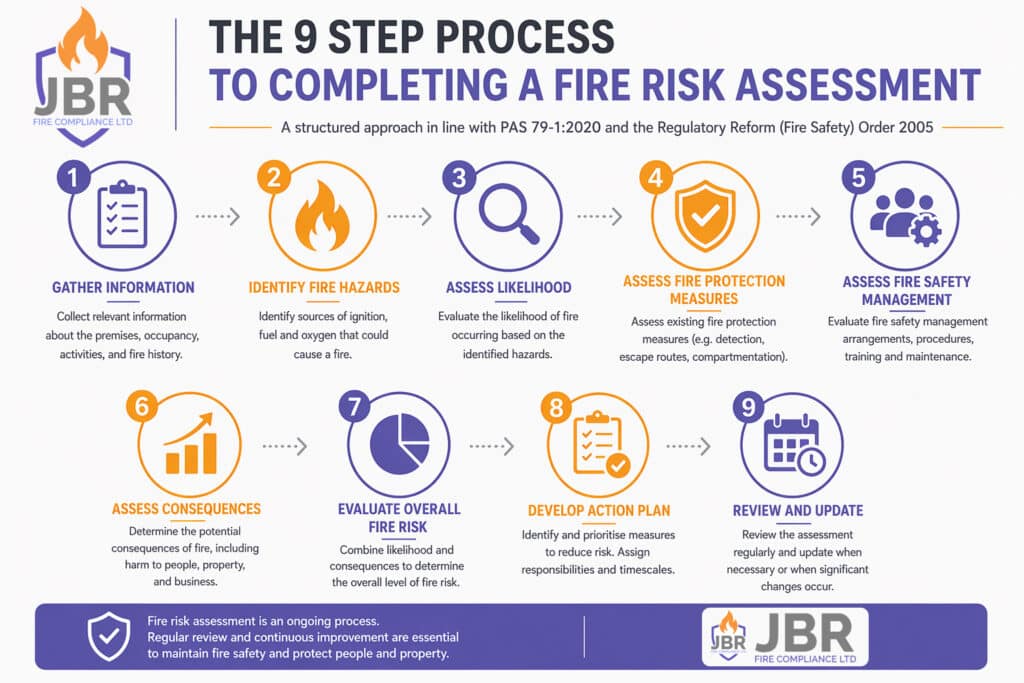
Effective fire safety management is particularly important within care homes due to the reliance placed on staff to protect vulnerable residents during an emergency. The assessment reviews fire safety policies, emergency plans, evacuation procedures, staff training records, fire drills, maintenance records and arrangements for vulnerable occupants, including Personal Emergency Evacuation Plans (PEEPs) where appropriate. Consideration is also given to staffing levels, resident dependency and the practicality of the evacuation strategy to ensure it can be implemented effectively in the event of a fire.
Active Fire Protection
Active fire protection measures are designed to detect, warn and assist in controlling a fire should one occur. The assessment reviews the suitability of the fire alarm system, emergency lighting, firefighting equipment and other installed fire safety systems. Particular consideration is given to whether early warning arrangements are capable of providing sufficient time for staff to implement emergency procedures and support residents who may require assistance during evacuation.
Passive Fire Protection
Passive fire protection plays a critical role in safeguarding residents and limiting the spread of fire and smoke throughout a care home. The assessment considers the suitability and condition of fire-resisting compartment walls, ceilings, fire doors, glazing systems and other elements intended to maintain the building’s fire strategy. Particular emphasis is placed on ensuring fire-resisting construction remains effective, providing sufficient protection to support the evacuation strategy adopted within the premises and allowing residents and staff additional time to reach a place of relative safety.
Fire Prevention
Fire prevention focuses on reducing the likelihood of a fire occurring in the first place. During the assessment, consideration is given to housekeeping standards, the storage and control of combustible materials, waste management arrangements and potential sources of ignition. Particular attention is given to areas such as kitchens, laundry rooms, plant rooms and staff facilities where the risk of fire may be increased. The effectiveness of management controls implemented to minimise fire risk throughout the premises will also be reviewed.
Care Home Fire Risks We Assess
Progressive Horizontal Evacuation
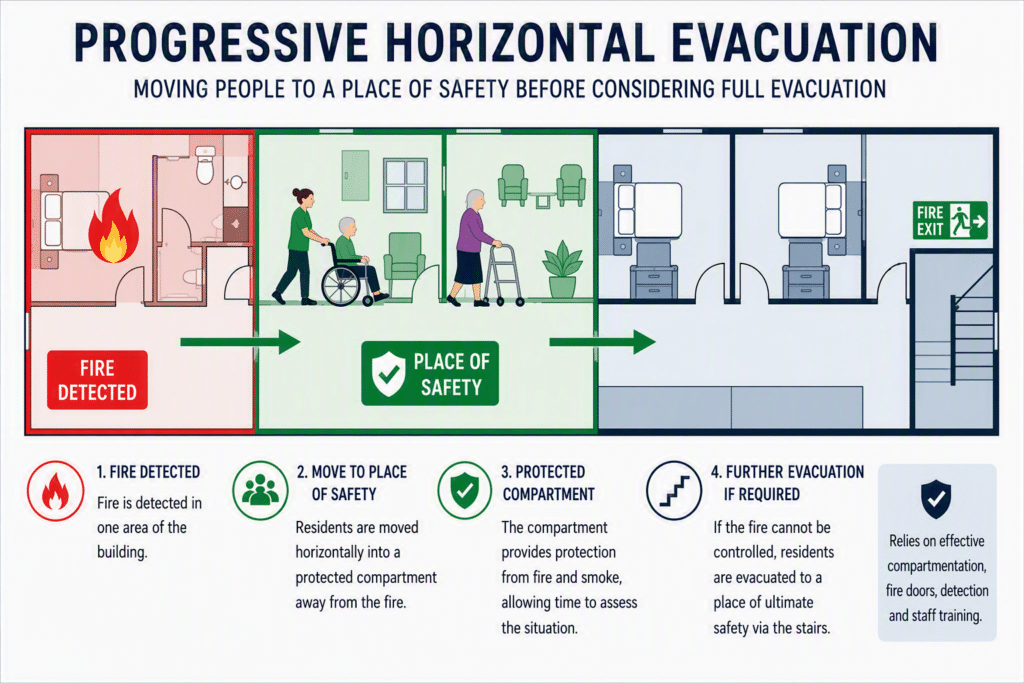
Due to the vulnerability of many residents, care homes can sometimes are required to adopt what is known as a Progressive Horizontal Evacuation strategy. This involves moving residents from the affected area into an adjoining fire-resisting compartment rather than immediately evacuating the building.
A fire risk assessment for care home will consider whether the compartmentation, fire doors, fire detection systems, staffing levels and emergency procedures are suitable to support the evacuation strategy adopted within the premises, JBR Fire Compliance will assess the;
Key Features of Progressive Horizontal Evacuation:
- Residents are moved away from the fire into an adjoining protected compartment.
- A full evacuation is not normally the initial response.
- Relies upon effective compartmentation and fire doors.
- Requires suitable fire detection and alarm systems.
- Depends upon adequately trained staff and clear emergency procedures.
- Provides additional time to assess the incident and coordinate a safe evacuation if required.
- Particularly suitable for care homes where residents may require assistance to evacuate.
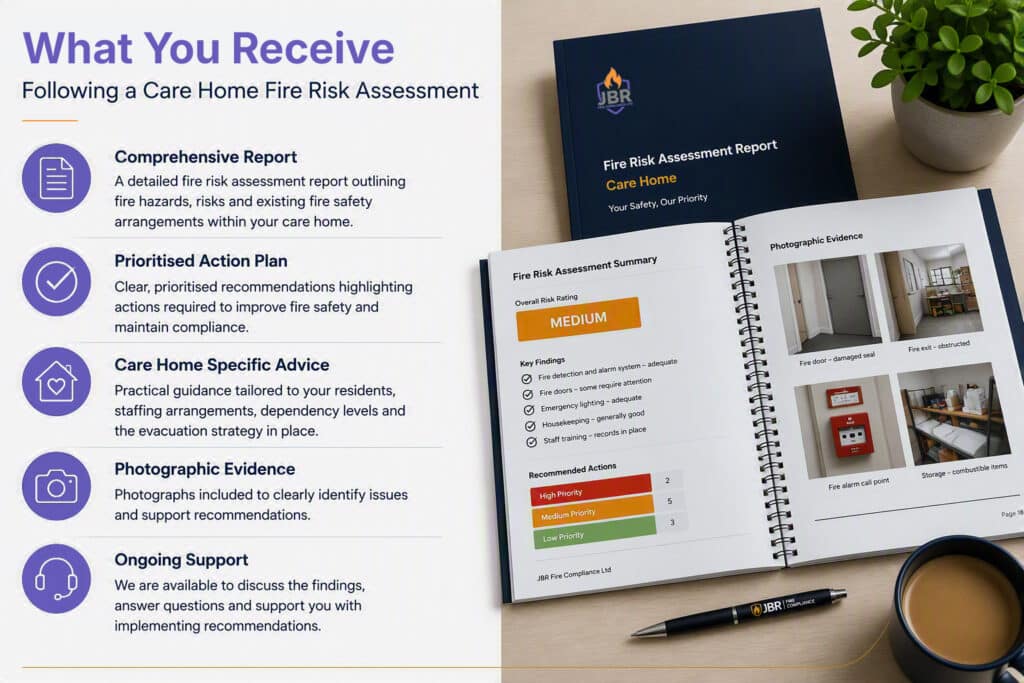
What You Receive post our inspection
At the completion of the assessment, JBR Fire Compliance will provide a comprehensive fire risk assessment report detailing the fire hazards identified, existing fire safety measures and an assessment of the associated risks. The report is designed to provide care home operators with clear and practical guidance to support ongoing compliance and improve resident safety.
- Comprehensive assessment of fire hazards and risks.
- Review of the existing fire safety arrangements.
- Evaluation of the evacuation strategy and resident dependency considerations.
- Assessment of passive and active fire protection measures.
- Identification of deficiencies and areas requiring improvement.
- Prioritised action plan with practical recommendations.
- Photographic evidence where appropriate.
- Identification of relevant fire safety legislation and guidance.
- Ongoing support and clarification following receipt of the report.
Fire Door Inspections in Care Homes
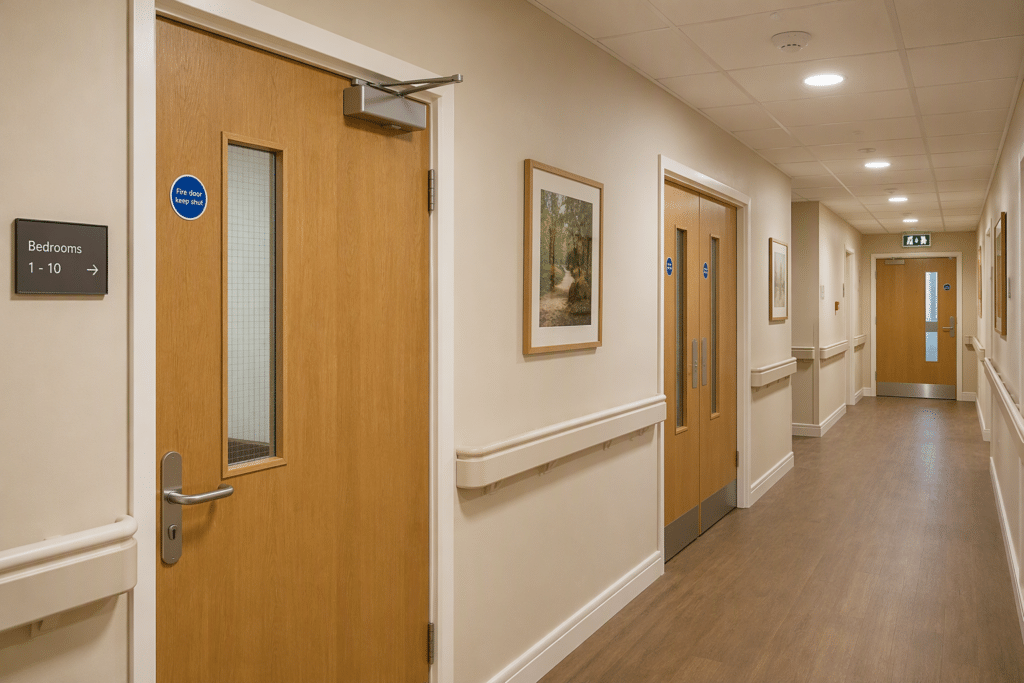
Fire doors play a vital role in protecting residents within a care home environment. In many cases, the adopted evacuation strategy relies upon residents being moved to an adjoining compartment rather than immediately evacuating the building. To support this approach, fire doors must remain capable of restricting the spread of fire and smoke and protecting escape routes.
Regular inspection and maintenance of fire doors helps to identify issues that could affect their performance, including damaged doors, excessive gaps, missing seals, defective self-closing devices and unauthorised alterations. Where residents may require assistance to evacuate, the reliability of these passive fire protection measures becomes particularly important.
JBR Fire Compliance provides dedicated fire door inspection services for care homes, helping responsible persons and care providers ensure fire doors remain effective and continue to support the building’s overall fire safety strategy.
Why choose JBR Fire Compliance
Following completion of the fire risk assessment, a comprehensive report will be provided detailing the findings of the inspection, the fire hazards identified and the existing fire safety measures present within the building. Where deficiencies are identified, practical recommendations will be provided and prioritised according to the level of risk posed.
Reports are designed to provide responsible persons, managing agents, freeholders and landlords with a clear understanding of the building’s fire safety arrangements and any improvements required. JBR Fire Compliance remains available to provide ongoing advice and support following completion of the assessment, helping clients effectively manage fire safety risks and maintain compliance with relevant legislation.

Areas We Cover
Frequently Asked Questions
Managing agents, landlords and freeholders often have questions regarding fire risk assessments and their responsibilities within residential buildings. Below are answers to some of the most common questions we receive relating to fire risk assessments for blocks of flats, fire safety management and legal compliance.
Who is responsible for fire safety in a care home?
What will a CQC inspector expect to see regarding fire safety?
Whilst fire safety enforcement falls primarily under Fire and Rescue Authorities, the CQC expects care providers to demonstrate that risks to residents are appropriately managed. This may include evidence of a suitable fire risk assessment, staff training records, fire drills, maintenance records, emergency procedures and arrangements for residents who require assistance during evacuation.
How often should a care home fire risk assessment be reviewed?
Will access to the flats be required?
The ability of residents to respond and evacuate during an emergency has a direct impact on the fire strategy adopted within a care home. The assessment should consider mobility, cognitive impairment, medical conditions and the level of assistance residents may require to reach a place of safety.
Why is resident dependency important during a fire risk assessment?
The duration of a fire risk assessment will depend upon the size of the building and the scope of the survey. Following an initial discussion regarding your premises and requirements, JBR Fire Compliance can provide advice on the anticipated timescale and level of assessment that may be required.
What is Progressive Horizontal Evacuation?
Progressive Horizontal Evacuation is the evacuation strategy commonly adopted within care homes. Rather than immediately evacuating occupants from the building, residents are moved into an adjoining fire-resisting compartment away from the immediate effects of fire and smoke. This approach provides additional time for staff to assist residents who may not be able to evacuate independently.
Do care homes require fire door inspections?
What happens if deficiencies are identified during the assessment?
What happens if deficiencies are identified during the assessment?
Can residents remain in the building during a fire risk assessment?
Yes. Fire risk assessments are typically non-intrusive and can normally be completed whilst the care home remains operational. Assessments are undertaken with consideration for residents, staff and day-to-day activities to minimise disruption.
For support with your care home follow the link below.
Whether you manage a small converted property, a purpose-built apartment block or a large residential development, JBR Fire Compliance can provide a suitable and sufficient fire risk assessment tailored to your building. Contact us today 07742105368 to discuss your requirements and obtain a quotation.