
What Is the Purpose of a Fire Alarm System?
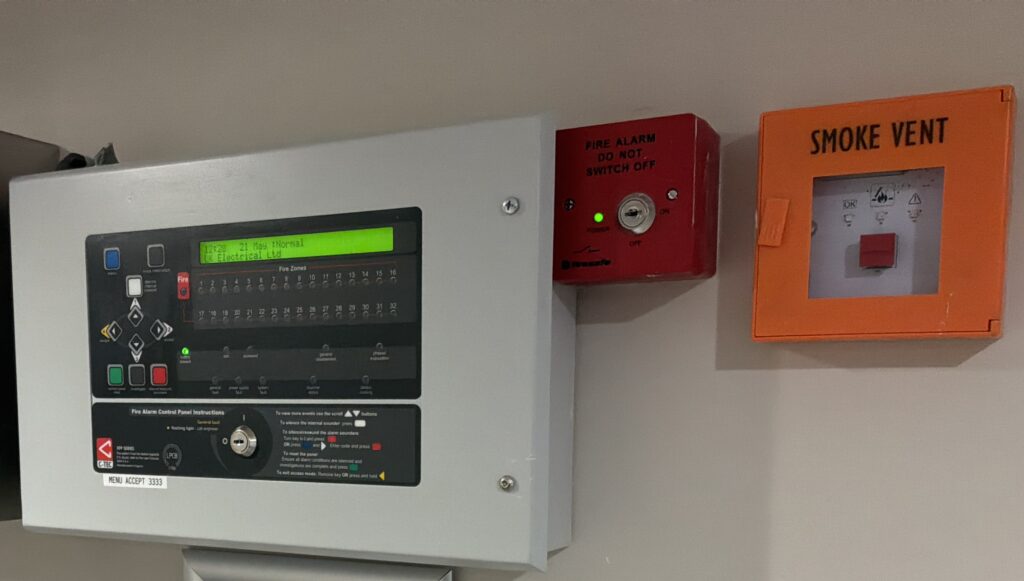
Fire alarm systems are an important part of a building’s fire safety arrangements. They are designed to provide early warning of fire, allowing occupants to begin emergency procedures and safely leave the building before conditions become life-threatening.
Early warning is one of the most important life-safety measures within any building. Smoke and fire detection systems provide occupants with additional time to escape, raise the alarm and contact the emergency services.
The life-saving value of working smoke alarms is well evidenced. The National Fire Protection Association states that the death rate in reported home fires is approximately 60% lower where working smoke alarms are present, compared with properties where no alarms are present or where alarms fail to operate. The UK Government also publishes detailed fire statistics relating to smoke alarm, fire incidents, casualties and fatalities, showing the importance of effective fire detection in reducing risk to life. [nfpa.org] [gov.uk], [ckan.publi…ice.gov.uk]
Although fire safety cannot be relied upon by one single measure, the widespread use of smoke alarms and automatic fire detection has become one of the most successful life-safety developments in modern fire safety.
Fire Alarm Standards in the UK
The main British Standards for fire detection and fire alarm systems are contained within the BS 5839 series. This series provides recommendations for the design, installation, commissioning and maintenance of fire detection and fire alarm systems in buildings. [fia.uk.com], [bsigroup.com]
The two most commonly referenced standards are:
- BS 5839-1: Fire detection and fire alarm systems for non-domestic premises.
- BS 5839-6: Fire detection and fire alarm systems for domestic premises.
BS 5839-1 applies to most commercial and non-domestic premises, including offices, shops, warehouses, factories, hotels, schools, care premises and places of assembly. BS 5839-6 applies to domestic premises, including houses, flats and certain types of residential accommodation.
Types of Fire Alarm Systems
There are several different types of fire alarm systems available; The type of fire alarm system required will depend on the size, layout, use and risk profile of the building.
Conventional Fire Alarm Systems
Conventional fire alarm systems are commonly used in smaller or less complex premises. These systems divide the building into zones. When the alarm activates, the fire alarm panel identifies the general area of activation, rather than the exact device.
Conventional systems can be suitable for smaller buildings where the source of activation can be quickly investigated.
Addressable Fire Alarm Systems
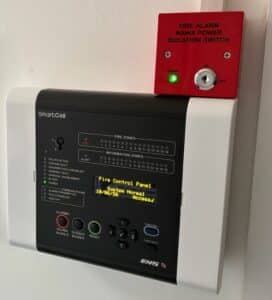
Addressable fire alarm systems are more advanced. Each detector, call point or device has its own unique address, allowing the fire alarm panel to identify the exact location of activation.
Addressable systems are often more suitable for:
- Larger buildings.
- Multi-storey premises.
- Complex layouts.
- Buildings with phased evacuation arrangements.
- Premises where investigation time must be kept to a minimum.
- Higher-risk commercial or residential buildings.
The benefit of an addressable system is that it provides clearer information to building users, management teams and attending fire crews.
Manual Call Points and Raising the Alarm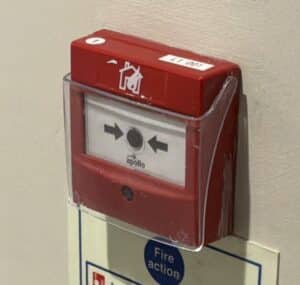
Fire alarm systems also help businesses meet the basic requirement to provide a suitable means of raising the alarm.
Manual call points, often referred to as “break glass” call points, allow a person discovering a fire to manually activate the fire alarm system. These are usually installed on escape routes, at storey exits and adjacent to final exit doors.
The purpose is simple: if someone discovers a fire, they can activate the alarm while leaving the building, warning other occupants at the earliest opportunity.
Does Every Business Need a Fire Alarm System?
Not every business will require a full automatic fire detection system throughout the building. Fire alarm requirements should be determined by risk.
The type and extent of fire alarm provision required will depend on several factors, including:
- The size and layout of the premises.
- The construction and fire separation within the building.
- The number of occupants.
- Whether occupants are awake, sleeping, vulnerable or unfamiliar with the building.
- The fire hazards present.
- The means of escape available.
- The ability of occupants to raise the alarm.
- The management arrangements in place.
A building being large does not automatically mean that extensive automatic fire detection is required. Equally, a smaller building may require enhanced detection where the risk profile justifies it.
A suitable and sufficient fire risk assessment is therefore essential in identifying the appropriate type, category and extent of fire alarm system required.
Fire Alarm Categories Explained
Fire alarm systems are commonly described by category. These categories help identify the level of protection provided by the system.
Category M Fire Alarm System
A Category M system is a manual fire alarm system.
This type of system relies on occupants discovering a fire and activating the alarm by operating a manual call point. Sounders are then used to warn other occupants within the building.
Category M systems may be suitable in some lower-risk premises where a fire is likely to be quickly identified by occupants.
Category L Fire Alarm Systems
Category L systems are designed primarily for life protection.
Category L1
A Category L1 system provides automatic fire detection throughout the building.
This is the highest standard of life protection category and is commonly used where early warning is required across all areas of the premises.
Category L2
A Category L2 system provides automatic fire detection within escape routes and additional higher-risk rooms or areas.
This may include areas such as plant rooms, kitchens, boiler rooms, electrical intake rooms or other spaces where a fire risk assessment identifies an increased risk.
Category L3
A Category L3 system is designed to protect escape routes.
Detection is generally provided within escape routes and rooms opening onto those escape routes, allowing occupants to be warned before smoke or fire compromises their means of escape.
Category L4
A Category L4 system provides automatic fire detection within escape routes only.
This is a more limited level of automatic detection and is normally used where the main objective is to protect the escape route itself.
Category L5
A Category L5 system is designed to meet a specific fire safety objective.
This may involve detection in a particular room, area or location where a specific risk has been identified. Category L5 systems are tailored to the circumstances of the building.
In most cases, Category L systems will also include manual call points similar to those provided within a Category M system. The exact arrangement should be determined by the system design and the fire strategy for the building.
Category P Fire Alarm Systems
Category P systems are designed primarily for property protection and business continuity.
These systems are intended to reduce damage to the building, contents, equipment or business operations by providing earlier warning of fire.
Category P1
A Category P1 system provides automatic fire detection throughout the building.
Category P2
A Category P2 system provides automatic fire detection within defined higher-risk areas.
Property protection systems may be required by insurers, business continuity planning, asset protection requirements or specific commercial risks.
Fire Alarm Testing and Maintenance
Once a fire alarm system has been designed, installed and commissioned, it must be properly tested and maintained.
A fire alarm system can only be relied upon if it remains in effective working order.
Typical fire alarm management arrangements include:
- Weekly user testing.
- Recording tests within a fire alarm logbook.
- Prompt reporting and investigation of faults.
- Periodic servicing by a competent fire alarm contractor.
- Checking batteries and standby power supplies.
- Testing detectors, call points and sounders.
- Reviewing system performance following alterations to the building.
Fire alarm maintenance should be carried out by a competent person with suitable training, knowledge and experience. Where defects are identified, they should be addressed without unnecessary delay.
Fire Alarm Systems in Domestic Properties
Fire alarm systems in domestic properties vary depending on the type of building, layout and risk.
In many modern homes, fire detection is provided by interlinked smoke alarms, often mains powered with integral battery backup. In some residential buildings, more advanced systems may be required, including a central control panel.
Domestic fire alarm requirements are also risk based.
For example:
- A purpose-built block of flats operating a stay-put strategy may not require detection throughout the common stairwell.
- A converted building may require enhanced detection where fire separation is uncertain.
- A house in multiple occupation may require a higher standard of detection.
- Short-term lets and holiday accommodation may require additional consideration due to unfamiliar occupants.
- Historic or complex buildings may need greater reliance on early warning where escape routes or construction standards present additional risk.
Where the standard of compartmentation cannot be confirmed, greater emphasis may need to be placed on automatic fire detection to provide occupants with earlier warning and more time to escape.
How a Fire Risk Assessment Can Help
A fire risk assessment should consider whether the existing fire alarm arrangements are suitable for the building and its occupants.
As part of the assessment, consideration should be given to:
- The current fire alarm category.
- Detector coverage.
- Manual call point locations.
- Alarm audibility.
- Visual alarm devices where required.
- Fire alarm maintenance records.
- Weekly testing arrangements.
- False alarm history.
- Changes to the building layout or use.
- Whether the system remains suitable for the risks present.
Where improvements are required, the fire risk assessment should provide proportionate recommendations based on the risk to occupants.
Fire Alarm Assessments and Advice
At JBR Fire Compliance Ltd, we assess the suitability of fire alarm arrangements as part of our fire risk assessment services.
We provide practical advice for businesses, landlords and responsible persons on fire alarm categories, fire detection coverage, maintenance arrangements and fire safety compliance.
If you are unsure whether your existing fire alarm system is suitable, a fire risk assessment can help identify whether the current arrangements are appropriate or whether improvements are required.
For help and support with your fire safety arrangements you can reach out to JBR Fire by clicking here